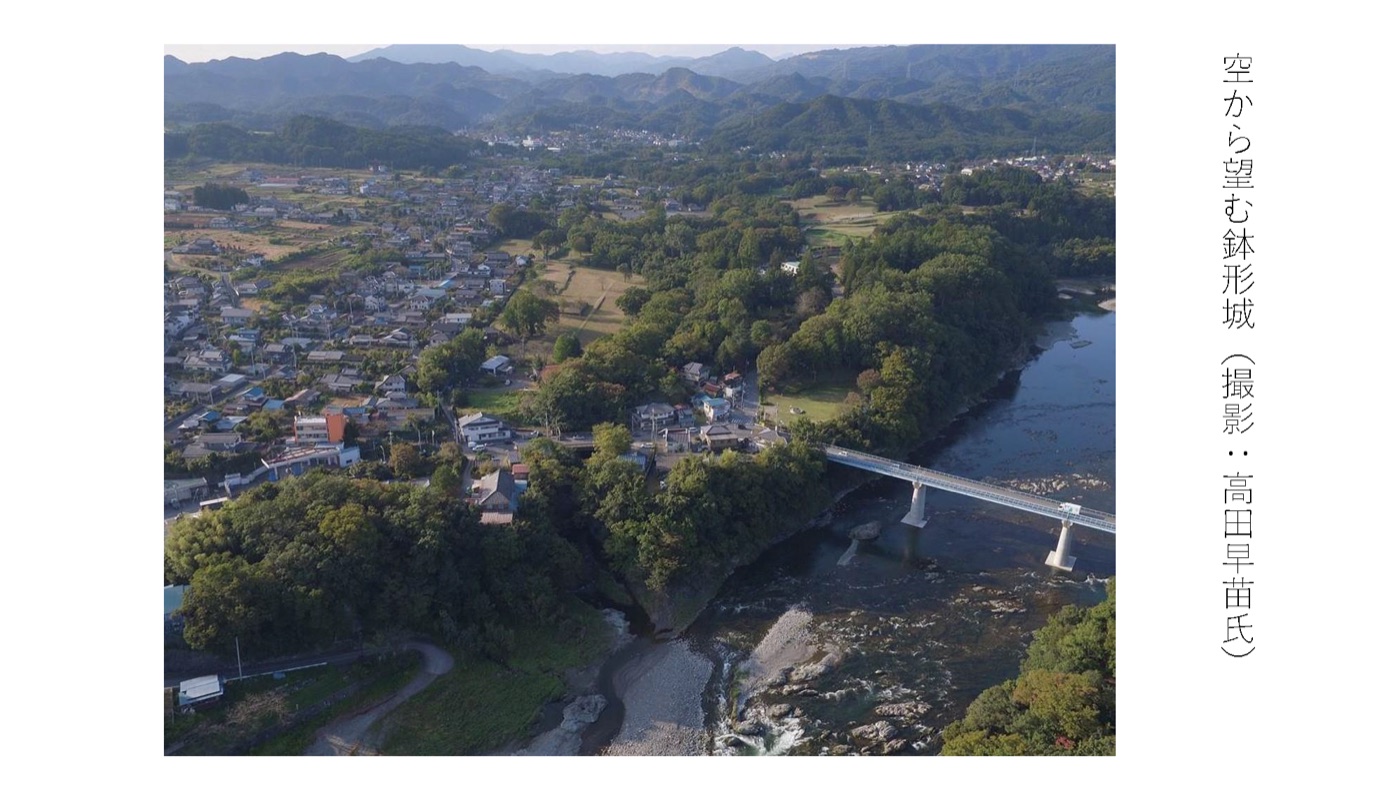
Most travelers who pass through Yorii on the Tobu Tojo line know Hachigata Castle, if at all, as one item in a familiar list: a "Hojo stronghold," surrendered to Toyotomi Hideyoshi during the 1590 Odawara campaign. The line is correct, as far as it goes. But standing on the wooded earthworks above the Arakawa, that one sentence feels strangely thin. The site has been a fortress, in some form, since the 1470s — and "the Hojo" were only its last occupants.
The Sengoku era began earlier in the East
Japanese textbooks tend to date the Sengoku era to the Onin War of 1467, when Kyoto's central authority began to fracture in earnest. In Eastern Japan, the slide began almost thirteen years earlier. In 1454, the Kamakura kubo Ashikaga Shigeuji had the regional shogunal deputy, Uesugi Noritada, assassinated. The resulting struggle — known as the Kyotoku War — pitted the kubo's faction against the Uesugi-led shogunal coalition, and turned the Kanto plain into a sustained civil zone before the Onin War even began.
Hachigata Castle is born inside that fracture. It is built not as a postcard ruin, but as one piece of a much harder political question: who, in this collapsing system, is actually allowed to govern the East?
Nagao Kageharu enters Hachigata to recover lost ground
The earliest occupant of Hachigata Castle for whom we have firm documentary evidence is Nagao Kageharu, the eldest son of a powerful retainer family that had served the Yamanouchi-Uesugi for generations. When Kageharu's father died in 1473, the post of family steward — a key office that controlled patronage and revenue — should have passed to him. Instead it went to his uncle. Kageharu's allies, who depended on those streams of income, lost their footing overnight.
What happened next was not just a personal grievance. Out of his network of dispossessed retainers, Kageharu built up Hachigata Castle as a base. In the summer of 1476 he left the main Uesugi camp at Ikkoshi-jin and moved to Hachigata. By the new year of 1477, his faction was in open revolt. The Nagao Kageharu Rebellion had begun, and Hachigata's first life was as a rebel garrison.
Uesugi Akisada turns Hachigata into a regional capital
In the summer of 1478, after Kageharu's rebellion had been worn down, Uesugi Akisada — the official Kanto Kanrei, an office answerable to Kyoto — moved into Hachigata. He would stay for thirty-two years, the longest of any documented occupant.
The man who pushed him there was Ota Dokan, the same general who is remembered today as the founder of Edo Castle. Dokan argued that Hachigata's geography mattered: a natural fortress between the Arakawa and the Fukasawa rivers, close enough to the old Kamakura highway to project force into Musashi and Kozuke without overcommitting. To Dokan, the imperial banner that had been entrusted to the Uesugi side belonged here, in this clearing above the river, not in some safer base further west.
For three decades, Hachigata was both a fortress and a kind of cultural court. In 1488, the renga poet Banri Shukyu spent thirty-six days drinking, writing verse, and exchanging poems with Akisada and his retainers in the camp nearby. The next morning, hungover, he stayed a night at Hachigata Castle itself, and afterwards described it in a Chinese-style poem as a place "even birds could not see into."
Two short reigns from the Koga line
In 1510 Akisada was killed in battle in Echigo, and the next two men to occupy Hachigata each held it briefly. Uesugi Akizane was a son of the Koga kubo, adopted into the Kanrei line in an attempt to bind the two great houses of Eastern Japan together. The strategy did not survive the politics: Akizane was driven out of Hachigata within three days of an attack from a rival branch.
Uesugi Norihiro, also drawn from the Koga line, may have used Hachigata as a base in the 1520s during a similar adoption-and-displacement struggle. After 1531, Hachigata effectively disappears from the record for thirty-some years, until the Hojo arrive.
Hojo Ujikuni and the surrender that wasn't a battle
The final occupant of Hachigata was Hojo Ujikuni. Born around 1548 as a younger son of Hojo Ujiyasu, he was married out as a teenager to the daughter of Fujita Yasukuni, a former retainer of the Uesugi who had switched sides. Ujikuni inherited the Fujita name and, eventually, moved his base from Hanazono Castle to Hachigata, somewhere between 1564 and 1569.
From Hachigata, Ujikuni fought the long border war against Uesugi Kenshin, took part in the brief Hojo–Uesugi alliance, and rebuilt influence across Kozuke after the Battle of Mimase Pass and the Kanagawa River campaign. He was the field commander on the northern frontier of the Odawara Hojo, and one of the highest-ranking generals in the family.
The most striking part of his story is also the most often skipped. In late 1589, when the Hojo decided to fall back into Odawara Castle and let the outer fortresses absorb Hideyoshi's army, Ujikuni objected. The plan, as he heard it, would sacrifice the very allies and townspeople he had spent two decades convincing to trust him. He insisted on going back to Hachigata alone and standing in the way of the northern advance instead.
Through the spring of 1590, as Hideyoshi's forces moved south through Kozuke and Musashi, Ujikuni wrote the central command repeatedly, asking for the lives of the people inside the surrounding castles to be spared. Hideyoshi wrote, in his own letters, that he had "not heard" these requests — and yet, in the same letters, that the request "for life only" was still being considered. On the 14th of June 1590, Hachigata Castle opened its gates without a battle. Ujikuni was spared, took the tonsure, and was eventually placed in the household of Maeda Toshiie in Kaga.
What the cliff above the Arakawa actually holds
Today the site has no stone walls and no keep. What it has, instead, is a layered set of decisions: a steward's son refusing to accept a stolen office, a Kanto Kanrei trying to keep an old order alive, two short-lived adopted heirs from a rival house, and a frontier commander who chose to be a public failure rather than break faith with the people behind him.
None of these men "won" in the ordinary sense. Three of them died in or near defeat. One was driven out in days. The fifth surrendered without firing back. But each one was, by his own lights, trying to hold something together — patronage networks, an old constitutional vision, an alliance, a population. Hachigata is not a victor's castle. It is a place where five different efforts to hold the line ran out of time.